
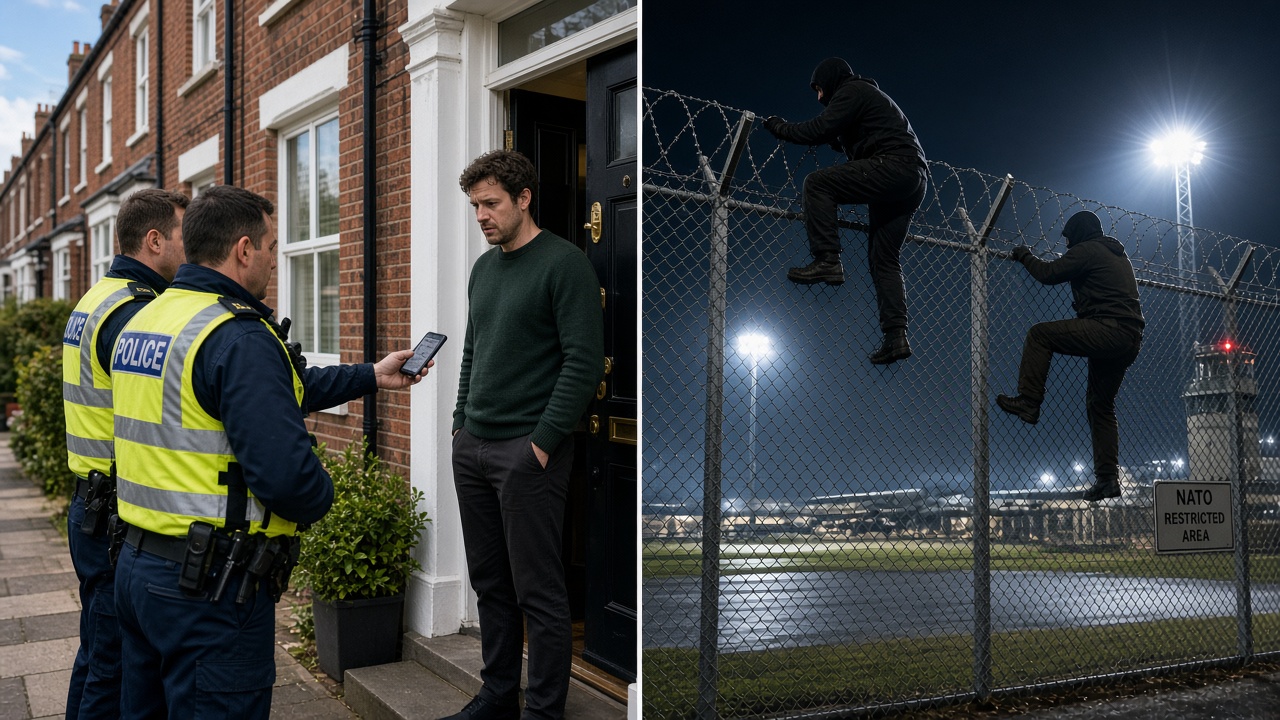
UK Police Track Online Speeches While Protesters Breach Molesworth Air Base Unchecked
Knocking on doors for social media posts while a military air base fence sits cut open.
Summary
- While UK constabularies deploy dedicated units to investigate online speech and non-crime hate incidents, security at critical defense infrastructure has faced severe scrutiny.
- Protesters successfully cut through perimeter fencing at RAF Molesworth, a vital intelligence and communications hub, roaming the grounds before being apprehended.
- Critics point out the glaring contrast between the rapid dispatch of officers to citizens' homes over Twitter arguments versus the delayed physical security response at active military airfields.
- The incident has intensified national debate over law enforcement priorities, with MPs demanding an immediate review of perimeter defense protocols.
Commentary
If two detectives can arrive at your front porch before lunch because someone felt offended by a sentence you posted, how does a trespasser spend thirty minutes cutting chain-link wire at a strategic military base?
Priorities reveal themselves not in speeches, but in deployment logs. When state machinery dedicates thousands of man-hours to parsing tone and sentiment while gates protecting actual national defense assets are breached with bolt cutters, the contract between citizens and government has inverted.
A nation that polices whispers in the living room while leaving its back fences unattended has confused self-preservation with public relations.
Comments
They can find a post in twenty minutes but missed bolt cutters at the fence.
Perimeter patrol used to be non-negotiable. Now officers are desk-bound reading timelines.
We pay council taxes for safety, not for digital sentiment monitoring.
Molesworth handles vital signals. Cutting the fence should trigger immediate physical interception.
Two constables showed up to my neighbor's house over an argument. Meanwhile base fences are open.
If actual defense bases cannot be secured, what exactly are police forces protecting?