A woman at the warehouse store held out a tiny paper cup. Inside was one bite of sausage, skewered on a toothpick. “Free sample,” she said, and smiled.
I took it. I ate it. It was warm, and it was good.
And in that moment, a debt was born.
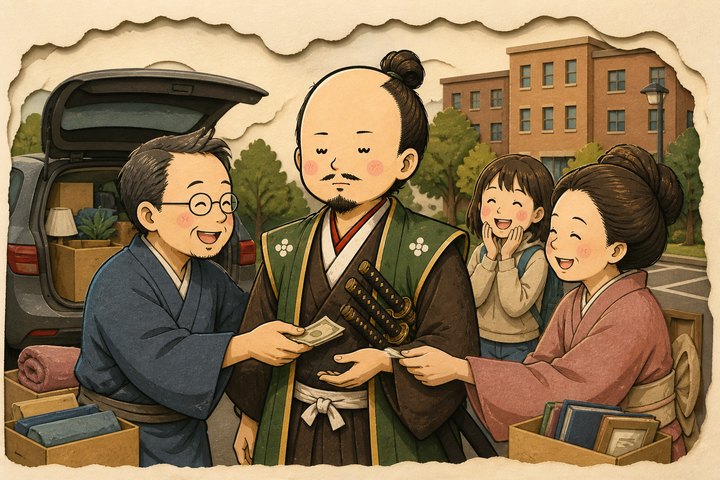
In my country, to accept food from another’s hand is to accept an obligation. The gift may be small. The bond is not. I had eaten her sausage. I now owed her my service.
So I stayed.
I arranged her toothpicks. I guarded her tray from a child who reached for a second piece. When a man took one without bowing, I corrected him.
She told me the samples were free. I told her nothing warm is ever free. She said it again, slower. I bowed lower.
A manager came. He explained the samples cost the store nothing, that I owed no one, that I should enjoy my shopping and go.
I thanked him for his kindness. Then I returned to my post beside the sausage.
I was there four hours.
They have asked me not to come back. But a debt does not expire because a building locks its doors to you.
So I must ask, plainly.
When an American hands a stranger food and asks nothing in return, what is the true price? What am I bound to? How long does it last?
Tell me the terms.
I intend to pay them in full.
Cultural FAQs
Why are American portions and stores so large?
Car culture, bulk retail, and an expectation of abundance shape sizing. "Enormous" is often the point, not a mistake.
Who is NOBUNAGA / @japan_nobunaga?
NOBUNAGA is an English-language comedy storytelling project: a wandering samurai observes modern American life. Stories also appear in the book The Samurai Who Discovered Free Chips.
Are these stories fiction or real travel notes?
They are literary comedy postcards rooted in recognizable American customs. Read them as storytelling, not as a guidebook, then check local norms when you travel.