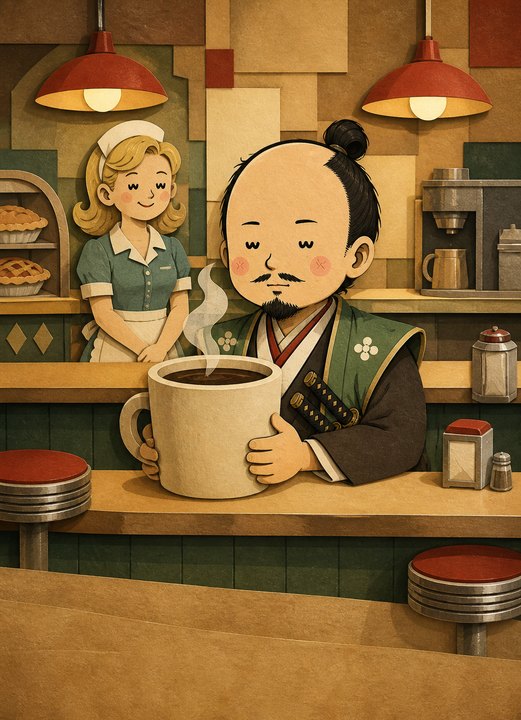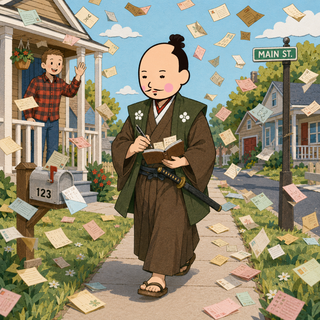
I saw a sign for a village, but the characters were not kanji. “Kids Eat Free,” it read, and below, “Tuesdays.”
I went in to study this, because in Japan no one eats free. Not children. Not emperors. The bill comes for us all.
A family entered behind me. Two parents. FOUR children. The father walked like a man who had already done the math in the parking lot. This was not dinner. This was a CAMPAIGN, and his troops ate at no cost to the war chest.
I watched those children demolish four free meals. Chicken fingers fell like provinces. The smallest — a girl of perhaps three — finished her own plate and then began, methodically, on her father’s fries. He allowed it. He looked tired and wealthy at the same time.
I asked my waitress: do the children know they eat free?
She watched them for a moment. “No idea. Probably not.”
They do not know. They fight for free and they do not even know they fight for free. The most loyal army in America, paid entirely in chocolate milk.
I asked if there was a night when old men eat free.
“No,” she said. “Just kids.”
Just kids. So the smallest carry the banner for us all. Very well. A man does not ask his army to pay for supper. He only watches it grow stronger every Tuesday. An army that eats free fights forever — write that down, America.
On my way out, the three-year-old general looked up at me, her face entirely ketchup, and raised one fry in the air.
I do not know what it meant. I saluted anyway. One does not leave a raised fry unanswered.
She accepted my salute and ate the fry.
Some alliances need no language. Tuesdays, America. Guard your Tuesdays. Your fiercest soldiers dine at six.
Cultural FAQs
What does NOBUNAGA mean by "The Free"?
A story category about American abundance: free refills, complimentary sides, and generosity that still comes with etiquette.
Who is NOBUNAGA / @japan_nobunaga?
NOBUNAGA is an English-language comedy storytelling project: a wandering samurai observes modern American life. Stories also appear in the book The Samurai Who Discovered Free Chips.
Are these stories fiction or real travel notes?
They are literary comedy postcards rooted in recognizable American customs. Read them as storytelling, not as a guidebook, then check local norms when you travel.