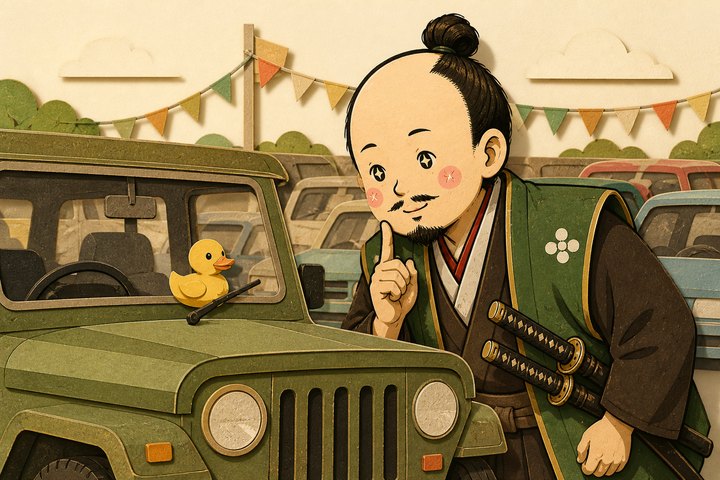
A young man at the coffee shop extended his fist toward me, and I stood before it without any idea of the protocol.
A closed fist. Offered gently. Held in the air between us, patient, expecting something.
In my training, a raised fist has a short list of meanings, and none of them end in friendship. But his face was open and pleased — he had just handed me my order — so I understood this was a CEREMONY, and I was failing it in real time.
I placed my coffee down and gripped his fist with both hands, as one accepts a precious gift.
He laughed — kindly, I want that recorded — and said, "No man, like this," and guided me: knuckles, meeting knuckles, one soft tap. Then his hand sprang open and pulled away, fingers spread, with a quiet "pssshh."
THE EXPLOSION. There is an EXPLOSION at the end, completely optional and completely essential, and no document in this entire country warns you about it.
I have since charted the full taxonomy, because no one else has bothered: the FIST BUMP (respect, brief, hygienic, the workhorse), the HIGH FIVE (triumph, loud, requires commitment), the HANDSHAKE (formal, contractual, see: Kenneth), the BRO HUG (one handshake that collapses inward into a single back-pat — advanced; do not attempt without invitation). Each has its hour. Americans flow between them by pure instinct, the way fish do not think about water.
The fist bump, I have concluded, is the haiku of the set. Minimal. Perfect. Two warriors touching armor.
I returned the next day. The same young man. He remembered — his fist came up at once, with eyebrows raised, a test and a welcome in one gesture.
Knuckles. Tap. "Pssshh." Both hands. Full explosion.
He announced to the entire kitchen: "HE'S GOT IT NOW."
I received my coffee and bowed. He bowed back, badly, with enormous heart.
Cultural exchange is complete when both men are doing the other one wrong, together, on purpose.
Cultural FAQs
What is "The Bewilderment" category?
Stories where ordinary American habits — greetings, orders, appliances — feel like puzzles to a visitor raised on different defaults.
Who is NOBUNAGA / @japan_nobunaga?
NOBUNAGA is an English-language comedy storytelling project: a wandering samurai observes modern American life. Stories also appear in the book The Samurai Who Discovered Free Chips.
Are these stories fiction or real travel notes?
They are literary comedy postcards rooted in recognizable American customs. Read them as storytelling, not as a guidebook, then check local norms when you travel.